
Introduction
Water storage systems play a vital role in residential, commercial, and industrial buildings. While choosing a high-quality water tank is important, selecting the right water tank pipe fittings is equally essential for ensuring a reliable plumbing system.
The right fittings help prevent leaks, maintain smooth water flow, simplify maintenance, and extend the lifespan of your plumbing system. Whether you’re installing a new water tank or upgrading an existing one, understanding different water tank plumbing fittings, water storage tank fittings, and water tank accessories will help you make informed decisions.
This guide explains the different types of fittings, materials, applications, installation tips, and maintenance practices.
What Are Water Tank Pipe Fittings?
Water tank pipe fittings are plumbing components used to connect pipes with water storage tanks. They regulate the flow of water into and out of the tank while ensuring secure, leak-proof connections.
Modern fittings are manufactured using materials such as:
- PVC
- CPVC
- UPVC
- Brass
- Stainless Steel
These materials are designed to withstand water pressure, moisture, weather conditions, and long-term use.
Benefits of Proper Water Tank Pipe Fittings
- Improve water flow efficiency
- Prevent water leakage
- Maintain proper water pressure
- Simplify maintenance
- Increase plumbing system durability
Why High-Quality Water Tank Pipe Fittings Matter
Using premium-quality fittings provides several advantages:
- Prevents water leakage
- Reduces maintenance costs
- Improves water pressure
- Extends plumbing system lifespan
- Ensures hygienic water storage
- Promotes efficient water distribution
- Minimizes repair frequency
Low-quality fittings may crack, loosen, or corrode over time, leading to costly repairs and water wastage.
Common Types of Water Tank Pipe Fittings
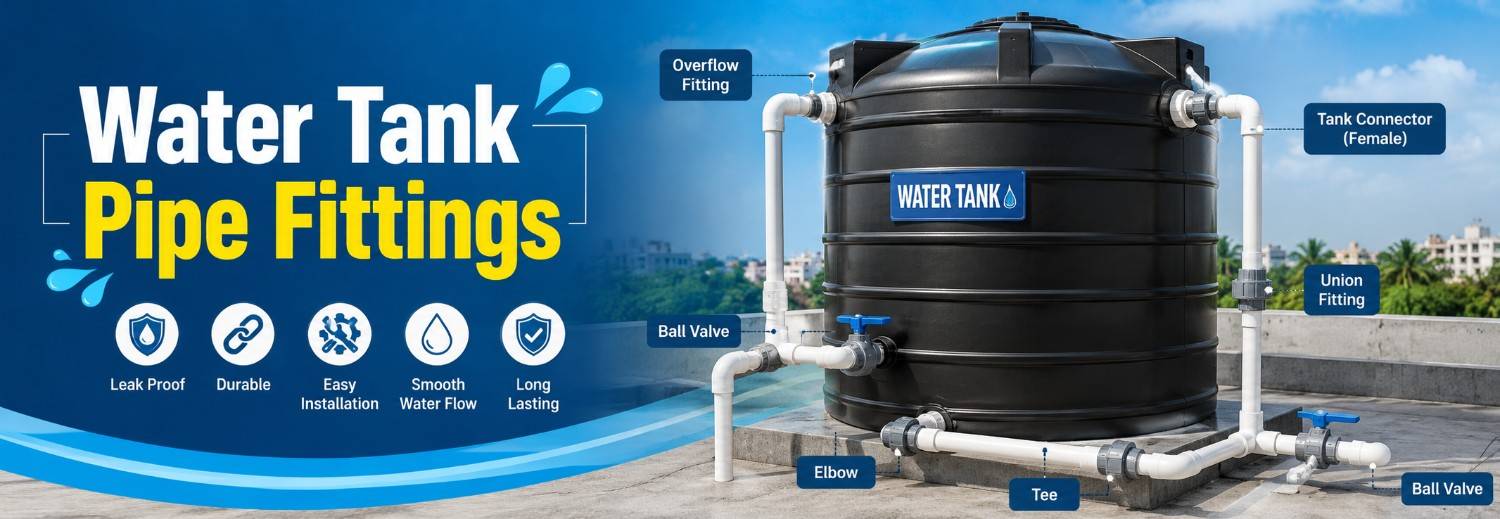
| Fitting | Purpose | Application |
|---|---|---|
| Elbow | Changes pipe direction | Tank inlet and outlet connections |
| Tee | Connects three pipelines | Splits water flow |
| Union | Allows easy pipe disconnection | Maintenance work |
| Coupling | Joins two pipes | Pipe extension |
| Reducer | Connects different pipe sizes | Flow adjustment |
| Ball Valve | Controls water flow | Water supply regulation |
| Check Valve (NRV) | Prevents backflow | Water pumps and storage tanks |
| Adapter | Connects different thread types | Tank connections |
Each fitting serves a specific purpose and contributes to an efficient plumbing system.
Materials Used for Water Tank Plumbing Fittings
Choosing the right material depends on water type, pressure, temperature, and installation environment.
PVC Fittings
PVC fittings are lightweight, affordable, and corrosion-resistant, making them ideal for cold water systems.
Advantages
- Rust-free
- Easy installation
- Cost-effective
- Low maintenance
CPVC Fittings
CPVC fittings are suitable for both hot and cold water systems due to their high-temperature resistance.
Benefits
- Higher pressure tolerance
- Excellent durability
- Chemical resistance
- Long service life
UPVC Fittings
UPVC fittings provide excellent strength without plasticizers.
Best For
- Drinking water supply
- Residential plumbing
- Industrial water systems
Brass Fittings
Brass fittings are strong and ideal for threaded plumbing connections.
Advantages
- High corrosion resistance
- Excellent sealing
- Long lifespan
Stainless Steel Fittings
Stainless steel fittings offer exceptional durability for commercial and industrial applications.
Features
- Rust-resistant
- Hygienic
- High-pressure capacity
Essential Water Tank Accessories
Besides pipe fittings, several accessories improve the efficiency of a water storage system.
These include:
- Float valves
- Overflow pipes
- Drain valves
- Air vents
- Tank connectors
- Inspection covers
- Water level indicators
- Pipe clamps
- Thread seal tape
- Rubber gaskets
Quality accessories help reduce maintenance and improve system performance.
How to Choose the Right Water Storage Tank Fittings
When selecting fittings, consider the following factors:
1. Pipe Size Compatibility
Choose fittings that match your pipe diameter to prevent leaks.
2. Material Compatibility
Always use compatible materials.
- PVC with PVC fittings
- CPVC with CPVC fittings
Avoid mixing incompatible materials.
3. Water Pressure
High-rise buildings require fittings capable of handling higher pressure.
4. Installation Location
Outdoor installations require UV-resistant materials.
5. Water Temperature
For hot water systems, choose CPVC or brass fittings instead of PVC.
6. Quality Certification
Look for ISI-certified products to ensure safety and reliability.
Installation Tips for Water Tank Pipe Fittings
Proper installation significantly improves system longevity.
Best Practices
- Clean pipe ends before installation.
- Apply solvent cement evenly.
- Avoid excessive adhesive.
- Allow sufficient curing time.
- Tighten threaded fittings carefully.
- Use thread seal tape where necessary.
- Check pipe alignment before joining.
- Perform pressure testing before use.
Professional installation reduces future plumbing issues.
Maintenance Tips for Long-Lasting Performance
Routine maintenance helps prevent unexpected failures.
Recommended Maintenance
- Inspect fittings every six months.
- Check for visible cracks.
- Replace worn rubber washers.
- Clean valves regularly.
- Remove mineral deposits.
- Monitor water pressure.
- Repair leaks immediately.
- Replace damaged fittings promptly.
Preventive maintenance reduces repair costs and conserves water.
Common Plumbing Problems Caused by Poor-Quality Fittings
| Problem | Possible Cause | Solution |
|---|---|---|
| Water leakage | Loose joints | Tighten or replace fittings |
| Low water pressure | Blocked pipe or fitting | Clean or replace fitting |
| Pipe cracks | Poor-quality material | Install premium fittings |
| Backflow | Faulty check valve (NRV) | Replace the check valve |
| Overflow | Damaged float valve | Install a new float valve |
| Rust formation | Corroded metal fittings | Use corrosion-resistant fittings |
| Water contamination | Poor sealing | Replace seals and connectors |
| Frequent repairs | Low-quality products | Install certified fittings |
Early detection helps prevent major plumbing failures.
Benefits of Premium Water Storage Tank Fittings
Investing in high-quality fittings offers long-term value.
Key Benefits
- Leak-proof plumbing
- Better water conservation
- Reduced maintenance
- Longer equipment life
- Improved water quality
- Lower repair expenses
- Better pressure control
- Enhanced plumbing safety
These benefits make premium fittings a smart investment for homeowners and businesses alike.
Applications of Water Tank Pipe Fittings
Water tank pipe fittings are widely used in:
- Residential homes
- Apartments
- Schools
- Hospitals
- Hotels
- Factories
- Commercial complexes
- Agricultural irrigation systems
- Rainwater harvesting systems
- Industrial water storage facilities
Their versatility makes them an essential component of every plumbing system.
Common Installation Mistakes to Avoid
Avoid these common mistakes to ensure long-term performance:
- Choosing incorrect fitting sizes
- Mixing incompatible materials
- Skipping pressure testing
- Over-tightening threaded joints
- Using low-quality adhesives
- Ignoring manufacturer installation guidelines
- Delaying leak repairs
- Purchasing uncertified products
Proper planning helps prevent costly plumbing failures.
Why Quality Water Tank Accessories Matter
High-quality water tank accessories improve plumbing efficiency, reduce water loss, and simplify maintenance.
Accessories such as float valves, connectors, overflow pipes, and inspection covers help ensure the tank operates safely and efficiently throughout its lifespan.
Durable water storage tank fittings also help maintain consistent water pressure, reduce contamination risks, and improve the overall lifespan of the plumbing system.
Conclusion
Selecting the right water tank pipe fittings is just as important as choosing the right water tank. Quality fittings ensure secure connections, smooth water flow, leak prevention, and long-term plumbing performance.
By choosing durable materials, following proper installation practices, and performing regular maintenance, you can significantly improve the efficiency and lifespan of your water storage system.
Whether for residential, commercial, or industrial applications, investing in premium water tank plumbing fittings, water storage tank fittings, and water tank accessories provides a reliable, efficient, and long-lasting water storage solution.
Frequently Asked Questions (FAQs)
1. Which material is best for water tank pipe fittings?
PVC and UPVC are ideal for cold water systems, while CPVC is recommended for hot and cold water applications. Brass and stainless steel are preferred where higher strength and durability are required.
2. How often should water tank pipe fittings be inspected?
It’s advisable to inspect all fittings at least every six months for signs of leaks, cracks, corrosion, or loose connections to prevent unexpected plumbing issues.
3. Can I use the same fittings for underground and overhead water tanks?
Not always. Underground installations may require fittings with higher pressure ratings and enhanced durability, while overhead tanks often use standard plumbing fittings based on system requirements.
4. What accessories are essential for a water storage tank?
Essential accessories include float valves, overflow pipes, drain valves, tank connectors, water level indicators, air vents, and quality sealing components to ensure efficient operation.
5. How can I prevent leakage in water tank plumbing fittings?
Use correctly sized fittings, apply the appropriate solvent cement or thread seal tape, avoid over-tightening threaded joints, and perform a pressure test after installation to identify and fix leaks early.