
Introduction
Modern plumbing systems demand materials that are durable, corrosion-resistant, and capable of delivering long-term performance. Among the most trusted solutions available today are UPVC CPVC pipe fittings, which play a crucial role in connecting, directing, and securing pipelines across residential, commercial, and industrial applications.
Whether you are constructing a new building, upgrading an existing plumbing network, or planning a water supply project, choosing the right fittings is just as important as selecting high-quality pipes. From leak-proof joints to easy installation and low maintenance, UPVC and CPVC fittings offer several advantages that make them a preferred choice for engineers, contractors, and homeowners alike.
What Are UPVC and CPVC Pipe Fittings?
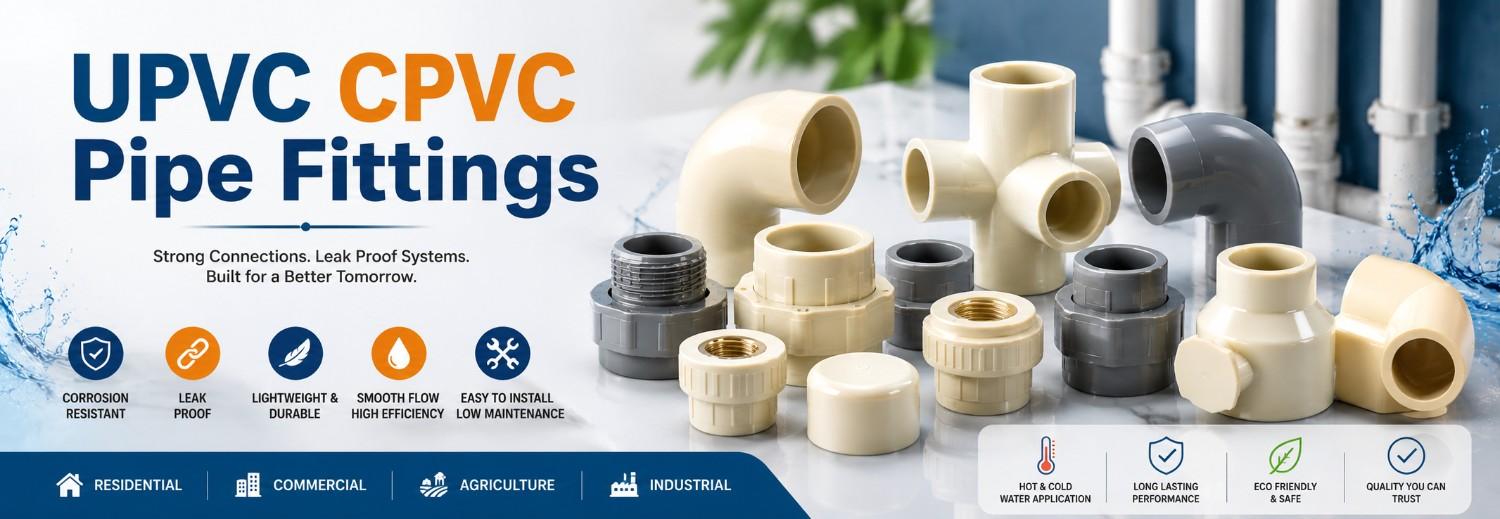
UPVC (Unplasticized Polyvinyl Chloride) and CPVC (Chlorinated Polyvinyl Chloride) pipe fittings are specially designed components used to connect sections of piping, change flow direction, regulate water movement, or terminate a pipeline.
While both materials belong to the PVC family, they are engineered for different applications:
- UPVC fittings are widely used for cold water distribution, irrigation systems, drainage, and chemical transport.
- CPVC fittings are designed to handle both hot and cold water applications thanks to their enhanced temperature resistance.
Together, these fittings provide a dependable solution for a wide range of plumbing and fluid management systems.
Why UPVC CPVC Pipe Fittings Are Popular
The growing adoption of UPVC pipe fittings, CPVC pipe fittings, and other PVC plumbing fittings is driven by their practical benefits and cost-effectiveness.
Some of the key advantages include:
1. Corrosion Resistance
Unlike metal fittings, UPVC and CPVC products do not rust or corrode when exposed to water or moisture. This ensures a longer service life and helps maintain water quality.
2. Lightweight Construction
These fittings are easy to transport, handle, and install, reducing labor costs and installation time on construction sites.
3. Leak-Resistant Connections
When properly installed using compatible solvents and techniques, UPVC and CPVC fittings create strong, reliable joints that minimize leakage.
4. Smooth Internal Surface
The inner walls remain smooth over time, reducing friction losses and supporting efficient water flow without significant scaling.
5. Low Maintenance
Minimal maintenance requirements make these fittings an economical solution for both residential and commercial projects.
Common Types of UPVC CPVC Pipe Fittings
Different plumbing layouts require different fitting configurations. Some of the most commonly used options include:
Elbows
Elbows are used to change the direction of water flow, typically at 45-degree or 90-degree angles.
Tees
Tee fittings allow a single pipeline to branch into two directions, making them essential for distribution systems.
Couplers
Couplers connect two straight pipe sections and are frequently used during repairs or extensions.
Reducers
Reducers join pipes of different diameters while maintaining efficient flow.
Unions
Union fittings allow easy disassembly for maintenance or replacement without cutting the pipeline.
End Caps
Caps seal the end of a pipeline, preventing unwanted flow or preparing the system for future expansion.
Adapters
Adapters help connect pipes with threaded fixtures or transition between different connection styles.
UPVC Pipe Fittings for Everyday Applications
UPVC pipe fittings are widely chosen for projects where cold water transport and chemical resistance are priorities.
Typical uses include:
- Residential water supply systems
- Agricultural irrigation networks
- Rainwater harvesting systems
- Swimming pool circulation
- Industrial fluid transport
- Drainage and waste management
Because UPVC does not react easily with many chemicals, it performs reliably in demanding environments while maintaining structural integrity.
CPVC Pipe Fittings for Hot Water Systems
One of the defining features of CPVC pipe fittings is their ability to withstand elevated temperatures compared to standard UPVC materials.
They are commonly installed in:
- Domestic hot water supply lines
- Hotels and hospitals
- Commercial kitchens
- Educational institutions
- Manufacturing facilities
- Multi-story residential buildings
The thermal stability of CPVC makes it suitable for applications where conventional plastic piping may not perform effectively.
Understanding PVC Plumbing Fittings
The term PVC plumbing fittings often refers broadly to fittings manufactured from PVC-based materials, including UPVC and CPVC variants.
These fittings help create complete plumbing systems by enabling:
- Directional changes
- Branch connections
- Size transitions
- Flow control
- Secure end closures
- Equipment integration
Selecting compatible plumbing fittings helps ensure system reliability and simplifies maintenance over the long term.
How to Choose the Right Pipe Fittings
When selecting UPVC or CPVC fittings, consider several important factors.
Match the Application
Determine whether the system will carry cold water, hot water, chemicals, or wastewater. CPVC is generally preferred for hot water applications.
Verify Pressure Ratings
Ensure the plumber fittings are designed for the operating pressure of the pipeline to maintain safe performance.
Confirm Size Compatibility
Using the correct diameter prevents leakage, flow restrictions, and installation issues.
Look for Quality Standards
Products manufactured according to recognized industry standards typically offer greater consistency and reliability.
Purchase from Trusted Manufacturers
Established brands often maintain stricter quality control processes and provide technical support for installers and project managers.
Installation Best Practices
Proper installation significantly influences the lifespan of any piping system.
For the best results:
- Clean pipe ends before assembly.
- Use compatible solvent cement where required.
- Allow sufficient curing time before pressurizing the system.
- Align fittings carefully to avoid stress on joints.
- Avoid overtightening threaded components.
- Test the completed system for leaks before regular use.
Following manufacturer recommendations helps maximize durability and minimize future repairs.
Key Benefits for Homeowners and Builders
Builders and property owners increasingly rely on UPVC and CPVC fittings because they deliver practical long-term value.
Major benefits include:
- Extended service life
- Reduced maintenance costs
- Faster installation
- Excellent resistance to corrosion
- Reliable hydraulic performance
- Cost-effective ownership
- Compatibility with modern plumbing systems
- Reduced risk of contamination from rust
These advantages make them suitable for projects ranging from small homes to large infrastructure developments.
Sustainability and Efficiency
Modern UPVC and CPVC products contribute to efficient resource management by reducing water leakage and minimizing replacement frequency. Their long operational lifespan lowers material consumption over time, while lightweight construction also reduces transportation energy compared to heavier alternatives.
As sustainable construction practices continue to evolve, durable piping components remain an important part of efficient building design.
Maintenance Tips
Although these fittings require relatively little maintenance, a few preventive measures can extend their performance:
- Conduct periodic inspections for visible damage.
- Avoid excessive mechanical impacts.
- Protect exposed outdoor installations from prolonged UV exposure where recommended.
- Replace damaged fittings promptly.
- Follow approved repair procedures instead of temporary fixes.
Routine monitoring helps maintain system efficiency and reduces unexpected downtime.
Future Trends in Plumbing Systems
The plumbing industry continues to adopt advanced materials that combine strength, ease of installation, and long service life. Innovations in manufacturing technology are improving dimensional accuracy, joint performance, and overall product consistency.
As demand for dependable water infrastructure grows, UPVC pipe fittings, CPVC pipe fittings, and PVC plumbing fittings are expected to remain central to modern residential, commercial, and industrial plumbing solutions.
Conclusion
Selecting high-quality UPVC CPVC pipe fittings is an essential step toward building a safe, efficient, and durable plumbing network. Whether the project involves cold water distribution, hot water supply, irrigation, or industrial applications, these fittings offer corrosion resistance, dependable performance, and long-term value.
By understanding the differences between UPVC pipe fittings, CPVC pipe fittings, and broader PVC plumbing fittings, homeowners, contractors, and engineers can make informed decisions that improve system reliability and reduce maintenance costs for years to come.
Frequently Asked Questions (FAQs)
1. What is the main difference between UPVC pipe fittings and CPVC pipe fittings?
UPVC fittings are primarily used for cold water and general fluid transport, while CPVC fittings are engineered to withstand higher temperatures, making them suitable for both hot and cold water systems.
2. Where are PVC plumbing fittings commonly used?
PVC plumbing fittings are used in residential plumbing, commercial buildings, irrigation systems, industrial facilities, drainage networks, and water distribution projects.
3. Are UPVC CPVC pipe fittings resistant to corrosion?
Yes. Both UPVC and CPVC fittings are highly resistant to rust and corrosion, making them a durable alternative to many metal plumbing components.
4. How long do quality UPVC and CPVC fittings typically last?
When properly installed and used under recommended operating conditions, high-quality fittings can provide reliable performance for several decades.
5. Can UPVC and CPVC fittings be used interchangeably?
Not always. Because they are designed for different operating conditions, especially regarding temperature resistance, the appropriate fitting should be selected based on the intended application and manufacturer guidelines.