
Introduction
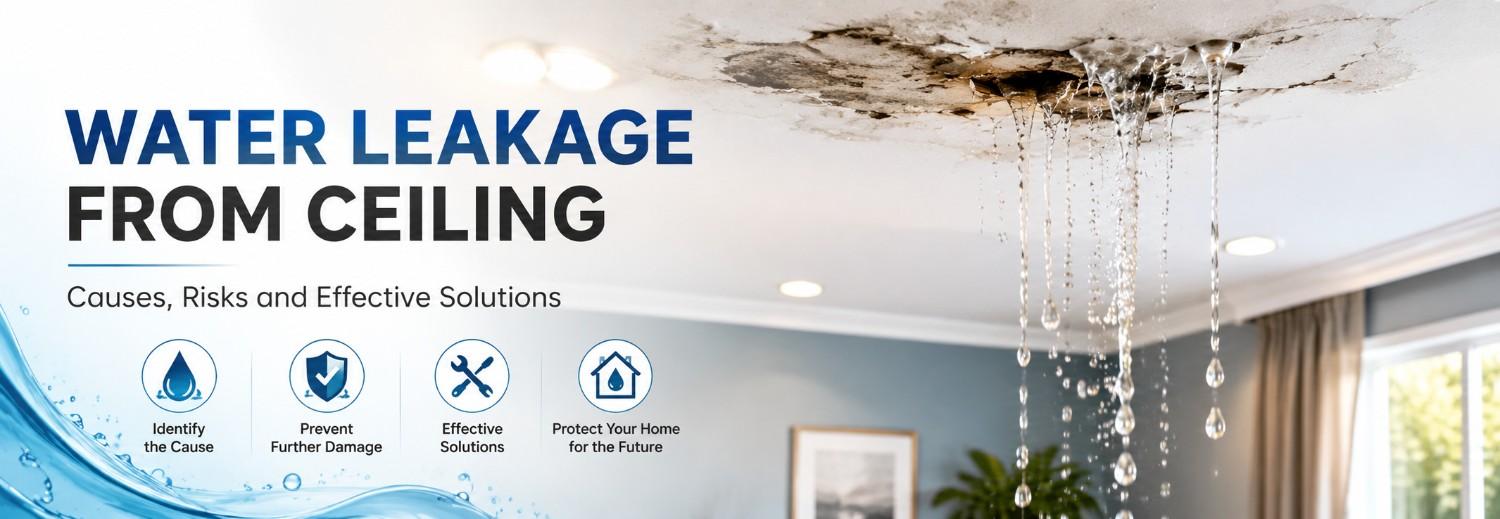
A wet patch spreading across your ceiling is never a good sign. Water leakage from ceiling is one of the most common and most misunderstood plumbing problems in Indian homes, especially in apartments and multi-storey buildings where a leak often starts one floor above you. Left unattended, a small ceiling leak can turn into serious ceiling water damage, weakened structures, electrical hazards, and mold growth within days.
This guide breaks down exactly why ceiling leaks happen, how to identify the source, and what kind of water leakage repair actually fixes the problem instead of masking it.
What Causes Water Leakage From Ceiling?
A leaking ceiling is almost always a symptom of a problem somewhere above the visible stain not at the stain itself. The most common causes include:
- Leaking overhead water tank or terrace tank: Overhead tanks are one of the biggest culprits in Indian homes. A cracked tank, a faulty float valve, or an overflowing tank on the terrace can send water seeping through the roof slab over time.
- Bathroom or kitchen plumbing above your ceiling: If the flat above you has a bathroom or kitchen directly overhead, a leaking pipe, loose joint, or damaged waterproofing in their floor can silently drip water down into your ceiling for weeks before it becomes visible.
- Damaged or aging waterproofing: Waterproofing membranes on terraces and bathroom floors degrade over 8–10 years. Once this layer fails, monsoon rain or daily water usage finds its way through hairline cracks in the concrete.
- Cracked or corroded pipes inside the slab: Concealed plumbing lines that run through the ceiling slab can corrode or crack with age (especially older galvanized pipes), leaking directly into the ceiling cavity.
- AC drain pipe leakage: A blocked or disconnected AC drain pipe is an often-overlooked cause, particularly when the leak appears near a wall-mounted air conditioner.
- Roof or terrace cracks: For top-floor homes, monsoon water can enter directly through cracks in the terrace slab, expansion joints, or poorly sealed parapet walls.
- Loose plumbing fittings or joints: Even a single loose CPVC or PVC joint in the pipeline running through the ceiling can cause a slow, persistent drip that shows up as a stain long before it becomes a visible leak.
Signs of Ceiling Water Damage to Watch For
Ceiling water damage rarely announces itself with a sudden flood. Instead, look out for:
- Yellow-brown stains or rings on the ceiling that slowly expand
- Peeling or bubbling paint
- A musty or damp smell in the room
- Sagging or soft patches in the ceiling
- Visible mold or mildew spots
- Damp walls near the ceiling line
- Flaking plaster or crumbling concrete in severe cases
Catching these signs early is the difference between a simple patch-up and a full ceiling repair involving structural work.
Why You Shouldn’t Ignore a Ceiling Leak
A ceiling leak might look like a cosmetic issue, but the risks compound quickly:
- Structural damage: Prolonged moisture weakens the concrete slab and steel reinforcement (rebar) inside it, leading to spalling and, in extreme cases, structural instability.
- Electrical hazards: Ceiling water often travels along wiring conduits, creating a real risk of short circuits or shocks especially dangerous if there are ceiling lights or fans nearby.
- Mold and health issues: Persistent dampness encourages mold growth, which can trigger allergies and respiratory issues.
- Rising repair costs: A leak that costs a few hundred rupees to fix at the source can turn into a lakh-rupee repair job once it damages plaster, paint, false ceilings, or furniture below.
How to Identify the Source of a Ceiling Leak
Before any repair work begins, the source needs to be traced accurately — fixing the visible stain without finding the actual leak point almost always means the problem returns.
- Check the floor above: If there’s a bathroom, kitchen, or terrace above the affected ceiling, that’s the first place to inspect.
- Look for patterns: A stain that appears only after rain points to a roof or terrace issue; one that appears regardless of weather usually means a plumbing leak.
- Inspect the overhead tank and its connections: Check for cracks, overflow issues, or a stuck float valve.
- Examine visible pipe joints: Look at any exposed plumbing near the affected area for moisture or corrosion.
- Use a moisture meter or dye test: Professional plumbers often use these to trace leaks hidden inside walls or slabs without unnecessary demolition.
Because ceiling leaks are frequently caused by plumbing in a neighboring or upstairs unit, this is one repair where DIY guesswork tends to fail an experienced plumber can pinpoint the exact source instead of repeated, ineffective patch-ups.
Water Leakage Repair: What the Fix Actually Involves
The right repair depends entirely on the root cause:
- Tank or float valve issues: Repairing or replacing the tank, float valve, or overflow pipe usually resolves this quickly.
- Pipe leaks inside the slab: This may require breaking a small section of the ceiling or floor above to access and repair the pipe, followed by proper re-plastering.
- Waterproofing failure: Re-waterproofing the terrace or bathroom floor above, using membrane or chemical waterproofing treatments, prevents recurrence a temporary ceiling patch without this step will leak again next monsoon.
- AC drain issues: Simply clearing or reconnecting the drain line often solves this without any structural work.
- Cosmetic repair: Once the source is fixed, the ceiling itself needs the damaged plaster removed, the area dried completely, and repainted with waterproof or damp-resistant paint.
Skipping straight to repainting without addressing the underlying leak is the single most common mistake homeowners make it hides the stain for a few weeks at best.
When to Call a Professional Plumber
Handle it yourself only if the cause is clearly visible and minor like a loose, accessible pipe joint. For anything involving:
- Leaks originating from a neighboring flat
- Pipes concealed inside walls or slabs
- Overhead tank or terrace waterproofing issues
- Recurring leaks after a previous “repair”
…it’s worth getting a verified professional involved. A trained plumber can trace the exact source using proper diagnostic methods, coordinate with your building society or upstairs neighbor if needed, and ensure the repair addresses the cause rather than just the symptom.
If you’re dealing with a ceiling leak anywhere in India, Expert Plumber India connects you with verified, rated plumbers in your area who specialize in leak detection and water leakage repair so you’re not left guessing where the problem is coming from or hiring someone unqualified to fix it.
Conclusion
Water leakage from the ceiling is rarely just about the stain you see it’s a signal pointing to a problem somewhere above or within the structure itself. Acting early, correctly identifying the source, and getting the right repair done (not just a repaint) will save you from far costlier structural and electrical damage down the line. When in doubt, get a qualified plumber to trace the leak properly before any cosmetic fix.
Frequently Asked Questions (FAQs)
1. What causes water leakage from the ceiling?
It’s usually caused by a leaking overhead tank, plumbing issues in the floor above, failed waterproofing, cracked pipes inside the slab, or roof/terrace cracks letting in rainwater.
2. Is ceiling water damage dangerous?
Yes. Beyond cosmetic damage, it can weaken the concrete slab and reinforcement over time, create electrical short-circuit risks near wiring, and encourage mold growth that affects air quality.
3. Can I repair a ceiling leak myself?
Minor, clearly visible issues like a loose pipe joint can sometimes be handled yourself. But if the source is hidden inside a slab or coming from a neighbor’s flat, it’s best to call a professional plumber to trace and fix it properly.
4. Will repainting the ceiling fix the leak?
No. Repainting only hides the stain temporarily. Unless the actual source- a pipe, tank, or waterproofing failure is repaired first, the leak and stain will return.
5. How much does ceiling water leakage repair cost in India?
Costs vary widely depending on the cause a simple float valve or joint fix may cost very little, while pipe repairs requiring slab work or full re-waterproofing can cost significantly more. Getting a plumber to inspect and quote based on the actual cause is the most accurate way to budget.