
Introduction
If you have ever stood in a hardware shop staring at a wall full of plastic joints and connectors, wondering which one actually fits your pipe, you are not alone. PVC pipe fitting choices confuse even people who have handled plumbing work for years. There are so many shapes, sizes, and purposes that picking the wrong one can mean a leak, a wasted trip back to the shop, or worse, a burst joint six months down the line.
This guide breaks down everything you need to know about plumbing PVC pipe fittings in plain language, no jargon overload, just practical information you can actually use.
What Exactly Is a PVC Pipe Fitting?
A PVC pipe fitting is a small plastic component used to connect, redirect, branch, or terminate PVC pipes in a plumbing system. Think of fittings as the joints and connectors that hold an entire piping network together. Without them, you would just have straight lengths of pipe with no way to turn corners, split water flow, or attach fixtures like taps and showerheads.
PVC, or polyvinyl chloride, became the material of choice for plumbing decades ago because it does not rust, does not corrode, and handles water pressure reliably for years without much maintenance. Fittings made from the same material naturally became the standard companion to PVC piping systems in homes, offices, and industrial setups across India.
Why Plumbers and Homeowners Prefer PVC Pipe Fittings
There is a reason PVC has largely replaced older materials like galvanized iron in residential plumbing. A few honest reasons:
- They resist corrosion completely. Unlike metal fittings that rust over time and eventually clog or leak, PVC fittings stay chemically stable even with years of water exposure.
- Installation is quicker and cheaper. Solvent cement bonding takes minutes, and there is no need for specialised welding tools or expensive labour.
- They are lightweight yet strong. A PVC fitting is easy to carry, easy to install overhead or in tight spaces, and still holds up well under standard water pressure.
- Cost stays low. Compared to metal or CPVC alternatives, standard PVC fittings are budget-friendly, which matters a lot on larger projects like housing societies or commercial buildings.
- They last long. A properly installed PVC joint can easily serve 25 to 30 years without needing replacement, provided the installation was done correctly in the first place.
Types of PVC Pipe Fittings You Should Know
Understanding the types of PVC pipe fittings available helps you pick the right component instead of guessing at the shop. Here are the ones you will come across most often.
- Elbows: These change the direction of pipe flow, usually at 45 or 90 degrees. They are essential wherever a pipeline needs to turn around a wall, corner, or obstruction.
- Tees: Shaped like the letter T, these fittings split one pipeline into two directions. They are commonly used when a single supply line needs to branch out to serve multiple fixtures.
- Couplers: A coupler simply joins two straight pipe sections together, extending the length of a pipeline without any change in direction.
- Reducers: When you need to connect two pipes of different diameters, a reducer bridges that gap smoothly, keeping water flow steady without pressure loss.
- Unions: These allow sections of pipe to be joined and later disconnected without cutting, which makes maintenance and repairs far easier.
- End Caps: Used to seal off the end of a pipeline completely, these are handy when a branch line is not needed immediately but might be used later.
- Cross Fittings: A four-way connector that allows a pipeline to branch in multiple directions from a single point, often used in more complex plumbing layouts.
Each of these plays a specific role, and mixing them up during installation is one of the most common mistakes first-time DIY plumbers make.
PVC Water Pipe Fittings for Everyday Use
When people talk about PVC water pipe fittings specifically, they usually mean the fittings used for cold water supply lines in homes, apartments, and commercial buildings. These fittings are engineered to handle standard municipal water pressure and are commonly used for:
- Kitchen and bathroom water supply connections
- Overhead tank to tap distribution lines
- Garden and outdoor irrigation setups
- Borewell and submersible pump connections
It is worth noting that PVC water pipe fittings are generally meant for cold water only. If your project involves hot water lines, CPVC fittings are the safer choice since they are built to handle higher temperatures without warping or weakening over time.
How to Choose the Right PVC Pipe Fitting
A few practical pointers before you buy:
- Match the pipe diameter exactly. Fittings are sized to match specific pipe diameters, so always carry a sample piece or note down the exact size before heading to the shop.
- Check the pressure rating. Fittings used for main supply lines should handle higher pressure ratings compared to those used for low-pressure drainage.
- Buy from a trusted brand. Cheap, low-quality fittings tend to crack under pressure or develop leaks within months. Established manufacturers test their products for durability, which saves you repair costs later.
- Consider the application. A fitting meant for drainage should never be used for pressurised water supply, even if it physically fits, because the wall thickness and strength are different.
Installation Tips That Actually Matter
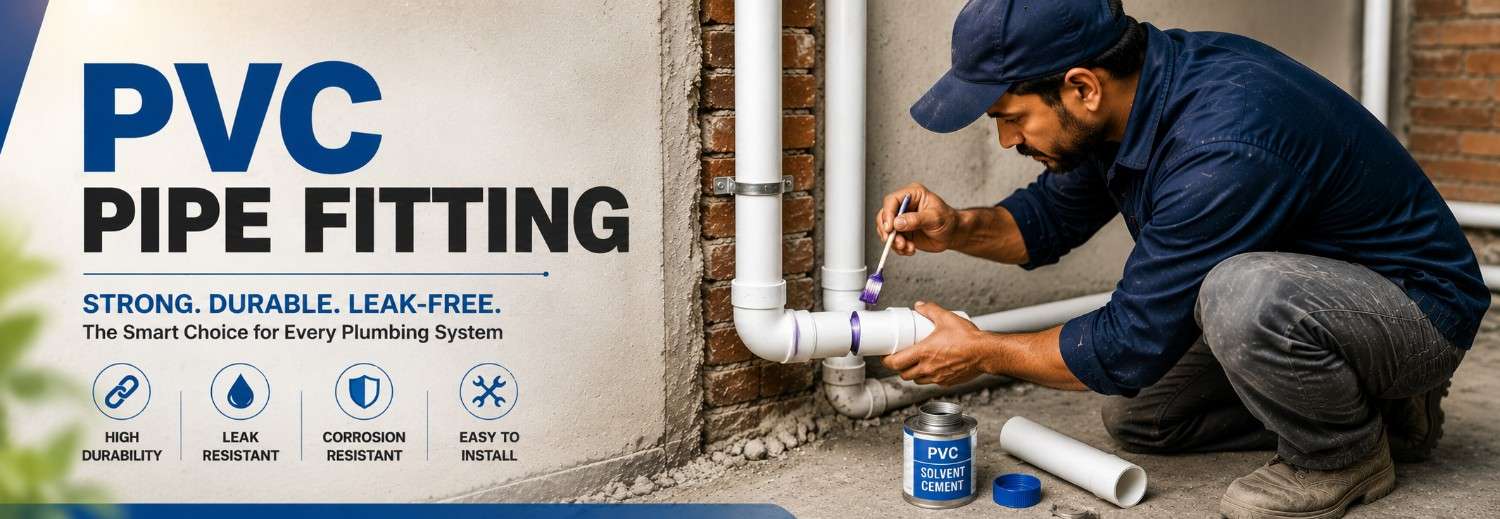
Even good quality fittings can fail if installed poorly. Clean both surfaces before applying solvent cement, apply the cement evenly, and hold the joint firmly for the recommended time so it sets properly. Avoid rushing the curing period. A joint that is put under water pressure too soon is far more likely to develop a leak later.
Common Mistakes People Make with PVC Pipe Fittings
Even experienced hands slip up sometimes, and a few mistakes show up again and again on residential sites.
- Skipping the deburring step. After cutting a pipe, sharp edges are often left behind. If these are not smoothed out before fitting, they can weaken the joint or damage the fitting’s internal walls over time.
- Using excess solvent cement. More cement does not mean a stronger bond. Applying too much can actually weaken the joint because it takes longer to cure properly and may seep into the pipe interior, narrowing the flow path.
- Ignoring pipe alignment. Fittings need to sit straight and true. A slightly twisted or misaligned joint puts uneven stress on the connection point, which often shows up as a slow leak months later.
- Mixing fitting classes. Not all PVC fittings carry the same pressure rating. Combining a low-pressure drainage fitting with a high-pressure supply line is a recipe for future trouble, even if the sizes happen to match.
- Rushing curing time. Water pressure applied before the joint has fully cured is one of the most common reasons new installations fail within the first few weeks.
Avoiding these small errors goes a long way in making sure your plumbing setup stays leak-free for years rather than months.
Conclusion
PVC pipe fittings might seem like small, unremarkable pieces of plastic, but they hold together the entire plumbing network of your home or workplace. Getting the right type, size, and quality matters more than most people realise until something goes wrong. Whether you are planning a new construction project or fixing a leaky joint, understanding these basics puts you in a much better position to make the right call, or at least ask the right questions to your plumber.
Frequently Asked Questions (FAQs)
1. What is the difference between PVC and CPVC pipe fittings?
PVC fittings are designed for cold water applications, while CPVC fittings can handle both hot and cold water since they are made to withstand higher temperatures without deforming.
2. Can PVC pipe fittings be used for hot water lines?
No, standard PVC fittings are not rated for hot water. Using them for hot water supply can cause the material to soften, warp, or fail over time. CPVC is the recommended choice for hot water lines.
3. How long do PVC pipe fittings typically last?
When installed correctly and not exposed to extreme temperatures or physical damage, PVC pipe fittings can last 25 to 30 years or more without needing replacement.
4. What size of PVC pipe fitting do I need for my home?
This depends on your existing pipe diameter and the specific application. Common residential sizes range from half inch for supply lines to four inches for drainage. Always match the fitting size to your existing pipework.
5. Are PVC pipe fittings suitable for both indoor and outdoor use?
Yes, PVC fittings work well both indoors and outdoors. However, prolonged direct sunlight exposure can cause gradual degradation over many years, so painting or shielding outdoor fittings can help extend their lifespan.