
Introduction
Pipe joints play a critical role in any plumbing system, connecting different sections of pipes and ensuring a smooth flow of water. However, over time, wear and tear, corrosion, high water pressure, improper installation, or aging materials can cause leaks at pipe joints. Even a small leak can lead to water wastage, structural damage, mold growth, and higher utility bills if left untreated.
If you are dealing with a dripping or leaking pipe connection, knowing how to repair a leaking pipe joint can save you time, money, and potential damage to your property. This comprehensive guide explains the causes of leaking pipe joints, the tools required, and the best repair methods for different types of plumbing systems.
What Causes a Pipe Joint to Leak?
Before starting any repair, it is important to identify the root cause of the problem. Common reasons for pipe joint leaks include:
1. Loose Connections
Over time, pipe fittings can loosen due to vibrations, pressure fluctuations, or regular usage.
2. Corrosion
Metal pipes and fittings may corrode, weakening the joint and creating small openings where water can escape.
3. Damaged Seals
Rubber washers, O-rings, and sealing materials can wear out and lose their effectiveness.
4. High Water Pressure
Excessive water pressure puts stress on pipe joints, increasing the risk of leaks.
5. Poor Installation
Incorrectly installed fittings or improperly applied thread sealant can eventually lead to leakage.
6. Aging Plumbing System
Older plumbing systems naturally deteriorate over time, making joints more susceptible to leaks.
Signs of a Leaking Pipe Joint
Identifying a leak early can prevent major repairs. Look for the following signs:
- Water dripping from pipe connections
- Damp walls or ceilings
- Water stains around plumbing fixtures
- Mold or mildew growth
- Reduced water pressure
- Increased water bills
- Musty odors near plumbing areas
Once you notice these symptoms, it is important to act quickly.
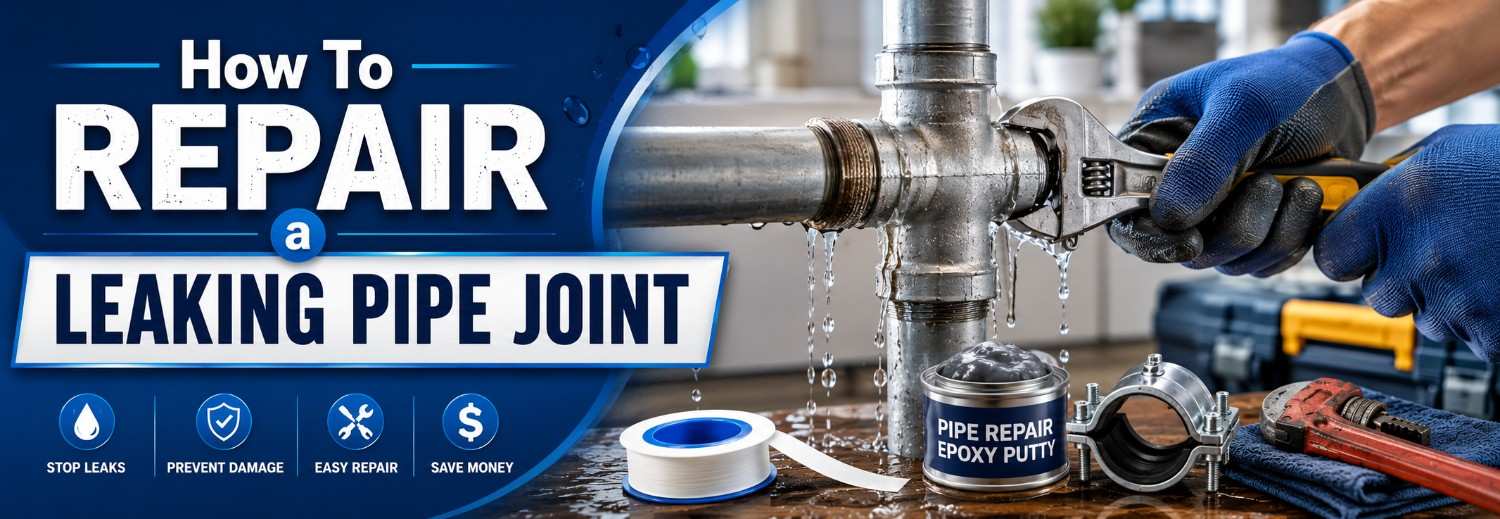
Tools and Materials Required
- Adjustable wrench
- Pipe wrench
- Teflon tape (PTFE tape)
- Epoxy putty
- Pipe repair clamp
- Rubber patch
- Replacement fittings
- Pipe cutter
- Sandpaper or wire brush
- Clean cloth
- Bucket or towel
Step-by-Step Guide: How To Repair a Leaking Pipe Joint
Step 1: Turn Off the Water Supply
Locate the main water valve and turn it off completely.
After turning off the supply:
- Open nearby faucets.
- Drain remaining water from the pipes.
- Place a bucket beneath the leaking area.
This prevents water from interfering with the repair process.
Step 2: Inspect the Leaking Joint
Carefully examine the leaking joint to determine the source of the leak.
Check for:
- Loose fittings
- Cracks in the pipe
- Corrosion
- Damaged threads
- Worn-out seals
A proper inspection helps you choose the most effective repair method.
Step 3: Tighten Loose Connections
One of the simplest answers to how to fix a leaking pipe joint is tightening the fitting.
Procedure:
- Use an adjustable wrench.
- Hold the pipe steady.
- Gently tighten the leaking fitting.
- Avoid overtightening as it may damage the threads.
After tightening, restore water flow and check whether the leak has stopped.
Step 4: Apply Teflon Tape to Threaded Joints
If the leak originates from a threaded connection, Teflon tape can provide a better seal.
Steps:
- Disconnect the fitting.
- Remove old sealant or tape.
- Wrap PTFE tape clockwise around the threads.
- Reassemble and tighten the joint.
This method works effectively for threaded metal and plastic pipe connections.
Step 5: Use Epoxy Putty for Temporary Repairs
Epoxy putty is an excellent temporary solution for small leaks.
How to Apply:
- Clean and dry the leaking area.
- Mix the epoxy according to manufacturer instructions.
- Apply it directly over the leak.
- Press firmly around the joint.
- Allow it to cure completely.
Epoxy creates a waterproof seal and can stop leaks until a permanent repair is completed.
Step 6: Install a Pipe Repair Clamp
For larger leaks or damaged joints, a repair clamp can provide immediate relief.
Installation Process:
- Place a rubber patch over the leak.
- Position the clamp around the pipe.
- Tighten the clamp evenly.
- Ensure the rubber covers the entire leaking area.
Repair clamps are commonly used for emergency repairs.
Step 7: Replace the Damaged Joint
When a joint is severely damaged, replacement is often the best option.
Replacement Procedure:
- Turn off the water supply.
- Cut the damaged section using a pipe cutter.
- Remove the faulty fitting.
- Install a new fitting or coupling.
- Apply sealant if required.
- Tighten securely.
Replacing damaged components ensures a long-lasting solution.
How to Stop a Leaking Water Pipe Joint
Many homeowners search for how to stop a leaking water pipe joint quickly. Here are the most effective methods:
For Minor Leaks
- Tighten fittings
- Apply Teflon tape
- Use plumbing sealant
For Moderate Leaks
- Apply epoxy putty
- Use pipe repair tape
- Install a repair clamp
For Severe Leaks
- Replace the damaged section
- Install a new fitting
- Contact a professional plumber
Choosing the correct method depends on the severity of the leak.
How to Stop a Leaking Pipe With Water in It
Sometimes shutting off the water supply may not be immediately possible. In such situations, homeowners often wonder how to stop a leaking pipe with water in it.
Temporary Solutions
Pipe Repair Tape
Self-fusing silicone tape can be wrapped tightly around the leak even when moisture is present.
Pipe Clamps
Repair clamps can often be installed while water remains inside the pipe.
Waterproof Epoxy
Some specialized epoxy products are designed for damp surfaces.
Important Note
These methods should only be considered temporary. A permanent repair should be completed as soon as possible to avoid further damage.
Repair Methods for Different Pipe Materials
PVC Pipes
PVC pipe joints may leak due to improper solvent welding or cracks.
Repair Options:
- Re-glue the fitting
- Replace damaged sections
- Use PVC repair couplings
CPVC Pipes
CPVC pipes are commonly used for hot and cold water supply.
Repair Options:
- Replace faulty fittings
- Apply CPVC solvent cement
- Install repair couplings
Copper Pipes
Copper joints often leak due to corrosion or failed soldering.
Repair Options:
- Re-solder the joint
- Use compression fittings
- Replace damaged sections
Galvanized Steel Pipes
These pipes are prone to rust and corrosion.
Repair Options:
- Replace corroded fittings
- Apply thread sealant
- Install new connectors
Preventing Future Pipe Joint Leaks
Prevention is always better than repair. Follow these tips to keep your plumbing system leak-free.
Conduct Regular Inspections
Check visible pipes and joints periodically for signs of wear.
Monitor Water Pressure
Install a pressure regulator if water pressure is consistently high.
Use Quality Materials
Choose high-quality pipes, fittings, and sealants during installation.
Avoid Excessive Force
Do not overtighten fittings during installation.
Replace Aging Components
Old plumbing parts should be replaced before they fail.
Schedule Professional Maintenance
Regular plumbing inspections can identify hidden issues before they become serious.
When Should You Call a Professional Plumber?
While many leaks can be repaired at home, professional assistance may be necessary if:
- The leak persists after repairs.
- Pipes are severely corroded.
- The leak is behind walls or underground.
- Extensive water damage has occurred.
- Specialized tools are required.
Professional plumbers can diagnose and resolve complex plumbing issues efficiently.
Conclusion
Understanding how to repair a leaking pipe joint can help homeowners prevent water damage, reduce repair costs, and maintain an efficient plumbing system. Whether the issue involves a loose fitting, worn seal, cracked pipe, or corroded connection, there are several effective solutions available.
For minor leaks, tightening fittings, applying Teflon tape, or using epoxy putty may solve the problem. More significant damage may require repair clamps or complete joint replacement. If you need to know how to fix a leaking pipe joint, how to stop a leaking water pipe joint, or how to stop a leaking pipe with water in it, following the methods outlined in this guide can help restore your plumbing system quickly and safely.
Regular maintenance and timely repairs are key to preventing future leaks and ensuring long-lasting plumbing performance.
Frequently Asked Questions (FAQs)
1. What is the easiest way to fix a leaking pipe joint?
The easiest method is tightening the fitting if it has become loose. For threaded joints, applying Teflon tape can also provide an effective seal.
2. Can epoxy putty permanently repair a leaking pipe joint?
Epoxy putty is generally considered a temporary or semi-permanent solution. Replacing damaged fittings provides a more reliable long-term repair.
3. How do I stop a leaking water pipe joint without replacing it?
You can use Teflon tape, plumbing sealant, epoxy putty, repair tape, or a pipe repair clamp depending on the severity of the leak.
4. How can I stop a leaking pipe with water in it?
Temporary solutions include self-fusing repair tape, waterproof epoxy, and pipe repair clamps designed for damp conditions.
5. Why does my pipe joint keep leaking after repairs?
Recurring leaks may result from corrosion, damaged threads, excessive water pressure, poor installation, or underlying structural issues that require professional inspection.