
Introduction
To find a water leak in a wall, ask three questions first. Does the damp patch change with the weather, with your water use, or not at all? The answer points to rain, a nearby pipe, or a constant source. Then confirm your guess with a pencil line and a meter reading. This guide shows how to find water leak in a wall in six simple tests. It also explains the causes of wall dampness and tells you when to call a plumber for wall leakage.
What Are the Early Signs of a Water Leak in a Wall?
A slow water leak in wall plaster rarely announces itself loudly. It leaves small clues instead. Learning how to find water leak in a wall starts with spotting them.
- A patch that darkens after use. If the stain deepens after a morning bath or a laundry cycle, a supply or drain pipe sits close behind it.
- Paint that blisters or flakes. Moisture pushes the paint film off the plaster.
- White crust on the surface. Water carries salts to the wall face and leaves them behind as it dries. This crust is called efflorescence.
- A hollow sound. Tap the plaster with your knuckles. A dull, hollow note means water has loosened the plaster from the brick.
- A musty smell or black spots. Both mean the wall stays wet for long stretches.
- A creeping water bill. Your usage climbs even though nobody in the house changed habits.
Feel the patch as well. A warm spot often marks a leaking hot water line from the geyser.
What Are the Causes of Wall Dampness in Indian Homes?
Plumbing gets blamed first, but it is only one suspect. These are the usual culprits.
- Concealed supply pipes. Joints, bends, and old metal pipes crack or corrode behind the plaster. Corrosion-resistant CPVC pipes lower this risk in new installations.
- Bathroom sunken slabs. Many Indian bathrooms sit in a recessed slab. When its waterproofing fails, water seeps into the wall or ceiling of the room below.
- AC drain pipes. A condensate pipe that runs through or beside a wall can loosen at a joint and soak the plaster near the unit.
- Washing machine and RO lines. Small drain and reject-water connections leak slowly and often go unnoticed.
- Rain seepage. Monsoon water enters through hairline cracks, terraces, and sunshades.
- Rising damp. Ground moisture climbs the lower part of a wall, usually within the first metre. This Designing Buildings guide explains the process.
- Condensation. Humid indoor air turns into droplets on cool walls when ventilation is poor.
How to Find Water Leak in a Wall: The 3-Clue Method
Plumbers often start by asking when the wall gets wetter. Track your patch for a few days and match it to one of these patterns.
| Clue | What you notice | Likely source |
|---|---|---|
| 🌧️ Weather | The patch grows after rain and dries in sunny spells. | Rain seepage, a terrace, or an external crack. |
| 🚿 Usage | The patch darkens after bathing, cooking, or laundry. | A drain or supply pipe near that fixture. |
| 💧 Constant | The patch stays wet all day and spreads slowly. | A pressurised supply line, rising damp, or a failed slab. |
Watch for overlap. A patch that grows after rain and after showers may have two sources. Fix the plumbing first, because a leaking pipe can keep a wall wet even after you seal the outside.
How to Find Water Leak in a Wall: 6 Tests You Can Do at Home
Run these tests in order. Each one needs only items you already own.
- Draw a pencil line and start a photo log. Outline the wet patch in pencil. Photograph it daily from the same spot with a coin beside it for scale. If the patch crosses the line within two days, the leak is active.
- Read the water meter. Close every tap and stop all appliances. Note the reading, wait two hours, and read it again. The EPA WaterSense programme recommends this check, and any movement suggests a leak. Run it while your supply is on, since many areas supply water at fixed hours.
- Mark the tank level. No meter? Keep the tank outlet open, stop the pump and the inlet, and close all taps. Mark the water level in the overhead tank and check it after a few hours. A drop means water escapes somewhere below.
- Tape up a foil square. Fix a 30 cm square of kitchen foil to the wall overnight. Droplets on the outside mean condensation from room air. Droplets underneath mean water is coming through the wall.
- Listen and tap. In a quiet hour, press a steel tumbler to the wall and put your ear to its base. A faint hiss suggests a pressurised pipe. Then tap the plaster around the patch to find where the hollow sound begins and ends.
- Switch things off one at a time. Close the isolation valve to one bathroom, then the kitchen. Turn off the AC and the RO unit for a day. Note which action stops the patch from growing.
Safety first. Switch off the MCB if the patch sits near sockets or wiring. Never drill or chisel the wall yourself. You can puncture a pipe or a live cable.
When Should You Call a Plumber for Wall Leakage?
DIY checks narrow the search, but they rarely name the exact spot. Call a plumber for wall leakage in these cases:
- The patch keeps growing after you close the isolation valves.
- Your meter or tank level keeps dropping.
- The damp area sits near switches, sockets, or a geyser line.
- The wall borders a bathroom above you or a neighbour’s flat.
- You cannot match the patch to weather, usage, or a constant source.
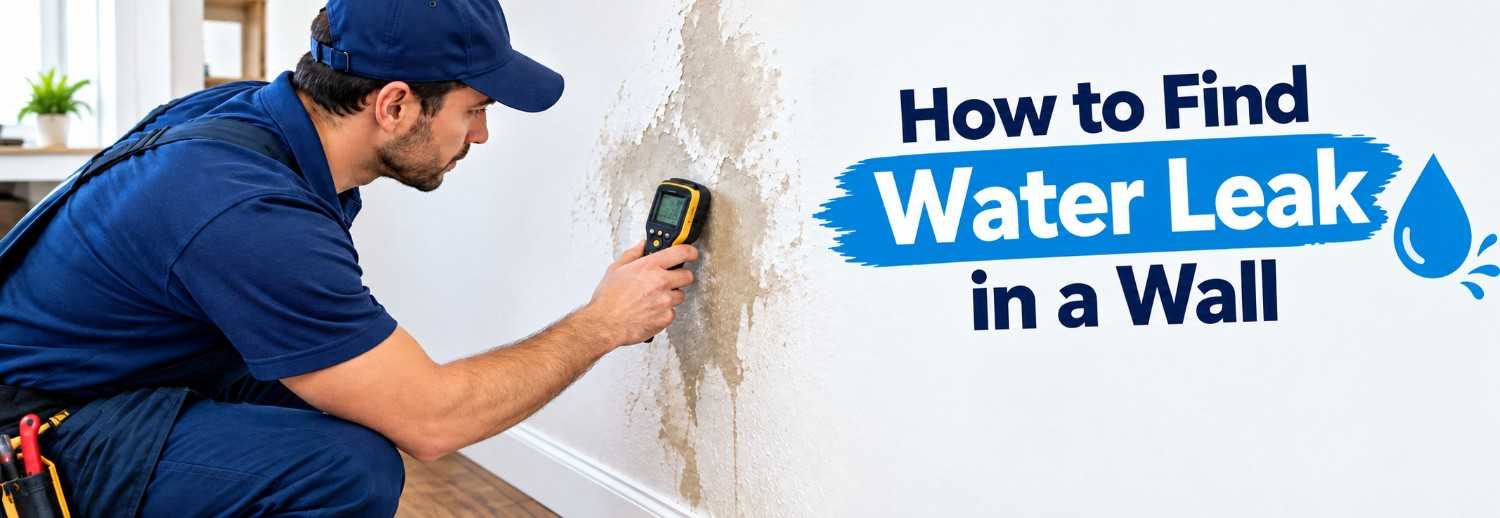
Professionals bring tools that show what your eyes cannot. A moisture meter maps the wet zone without cutting the plaster. A thermal camera picks up cooler wet patches and warm hot water lines. An acoustic device hears water escaping under pressure. A pressure test shows whether a pipeline holds. With this evidence, the plumber opens only the small area that needs repair, which saves chiselling and repainting.
Expert Plumber India lists verified plumbers in several Indian cities. Browse the plumbers directory and compare profiles and reviews.
How Can You Stop a Wall Leak Before It Starts?
Prevention costs far less than repair, and it means you never learn how to find water leak in a wall the hard way. Build these habits:
- Pressure-test new pipelines before the plasterer covers them. A water leak in wall pipework usually starts at a joint, so test every joint.
- Choose pipes and fittings that meet Indian (BIS) standards.
- Use certified CPVC pipes and fittings for hot and cold water lines. Ajay Pipes says its Flowline Plus CPVC range carries NSF/ANSI 14 and 61 certification from IAPMO India for drinking water use.
- Photograph every pipe route before the plaster goes on, and save the photos. Future repairs then need far less chiselling.
- Run a 24-hour water ponding test after any bathroom waterproofing job.
- Clear gutters, rainwater pipes, and AC drain lines before the monsoon.
- Read your water meter once a month and track any unusual rise.
Conclusion
Now you know how to find water leak in a wall. Start with the three clues, then run the six tests. Together they show whether the wall is reacting to rain, to your water use, or to a constant leak. When the source stays unclear, or the damp patch sits near wiring, stop guessing and book a professional.
FAQs
Draw a pencil line around the damp patch. Then read your water meter before and after two hours with all taps closed. A patch that crosses the line and a meter that moves together confirm an active pipe leak. If only one happens, test rain seepage or condensation next.
Watch when the patch grows. Rain seepage worsens after showers and dries in sunny spells. A plumbing leak follows your water use or stays wet all year. A meter or tank-level test settles any doubt.
Yes. A condensate pipe that runs through or beside a wall can leak at a joint and soak the plaster. Switch the AC off for a day. If the patch stops growing, call an AC technician to check the drain line.
Not for concealed pipes. You can close the isolation valve and tighten visible fittings. Chiselling into a wall risks puncturing a pipe or live wiring. Hire a qualified plumber for any leak inside the wall.
Yes, if it continues. Long-term moisture weakens plaster, ruins paint and wood, and encourages mold. Over time it can also corrode steel inside concrete. Fix the source early to avoid costly repairs.