
Introduction
Today’s modern plumbing systems require materials that are capable of resisting pressure, temperature fluctuations and years of use without any degradation in performance. Today, there are numerous types of plumbing fittings available for water distribution systems, but CPVC Plumbing Fittings are popular choices for residential, commercial, and industrial plumbing, thanks to their durability, corrosion resistance, and easy installation.
Choosing the correct CVVC fittings is an important part of building a new plumbing system or upgrading an existing one; it is essential to have the water flowing efficiently and leak-free. This guide delves into the use, application, benefits, and selection of CPVC plumbing fittings and explains why they continue to be a smart investment for contemporary infrastructure.
What is CPVC Plumbing Fittings?
CPVC (Chlorinated Polyvinyl Chloride) plumbing fittings are a specially designed component that is used to connect, redirect, branch or terminate CPVC piping systems. They are made to fit with CPVC pipes and are mostly employed for hot and cold water distribution.
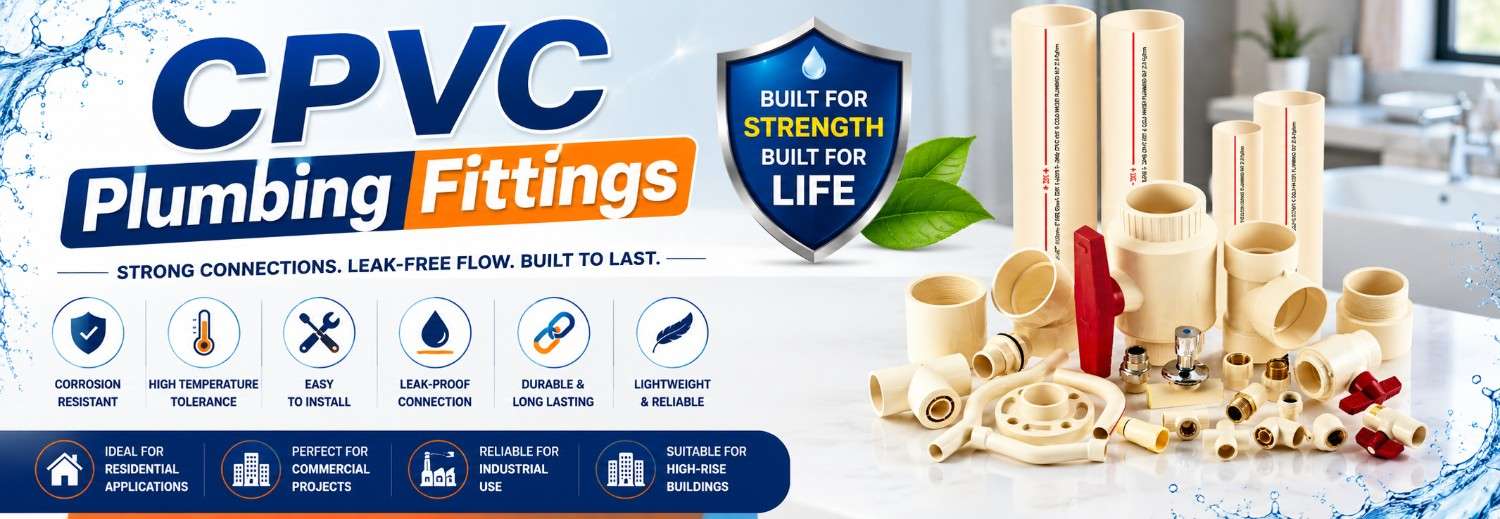
There are a wide variety of configurations, such as elbows, tees, reducers, unions, adapters, end caps and CPVC couplings, that can be used to allow installers to create customized plumbing configurations for various applications.
The major benefits of CPVC Plumbing Fittings are as follows:The major merits of CPVC Plumbing Fittings are as follows:
- Superior Corrosion Resistance
CPVC fittings are not subject to rust or corrosion as may occur with metal fittings, but are resistant to moisture, chemicals and mineral deposits. This keeps water quality in the system and will help prolong the life of the plumbing.
- High Temperature Tolerance
The materials are CPVC, designed to withstand the high temperatures that are typical in hot water lines, which can be used in residential and commercial plumbing applications.
- Light weight and easy installation.
The light weight construction is one of the many benefits of CPVC fittings. Their transport and cutting and joining with solvent cement are convenient and shorten the installation time and labor cost.
- Smooth Internal Surface
The inner smooth walls reduce friction losses, ensure uniform water pressure and prevent the formation of scale deposit.
- Long Service Life
If properly installed, CPVC plumbing systems can serve for many years with very little maintenance.
Common CPVC Plumbing Fittings:
There are a plethora of different fittings available to suit the various plumbing requirements.
Elbows
The item used to redirect the flow of water, usually 45 degrees or 90 degrees.
Tees
Allow multiple direction branching of pipelines without compromising water distribution.
Reducers
Join pipes of varying sizes, use gradual changes in pipe size throughout system.
Unions
Include detachable joints for easy maintenance and repairs.
Adapters
Use threaded components or fixtures with CPVC pipes.
CPVC Couplings
CPVC couplings are one of the most common fittings. They securely connect two straight pipe sections without causing any leakages in the pipeline.
End Caps
Seal pipeline ends where future expansion and/or temporary closure will be needed.
The significance of good quality CPVC pipe connectors.
When it comes to plumbing systems, the reliability of CPVC pipe connectors plays a crucial role in ensuring the structural integrity of the system. Low quality connectors can cause leaks, pressure loss or premature failure.
Premium connectors offer:
Good connection to CPVC pipes
Consistent dimensional accuracy
The ability to resist the expansion of heat.
Excellent pressure-handling capability.
The use of certified CPVC pipe connectors will benefit in lowering maintenance costs and increasing the reliability of plumbing systems.
The various uses of CPVC plumbing fittings.
CPVC fittings are used in various sectors and in different types of buildings.
Residential Buildings
CPVC fittings are used with the domestic water supply, on kitchen water mains, bathrooms, overhead water tanks and hidden plumbing systems.
Commercial Properties
CPVC is known for its durability and low maintenance, making it suitable for use in various settings such as hotels, offices, malls, and educational institutions.
Healthcare Facilities
In hospitals and clinics, a hygienic water distribution system is needed and where materials with no corrosion can help maintain the water quality.
Industrial Installations
CPVC systems are commonly used for transporting water and compatible fluids across many industries due to their chemical resistance and reliable performance.
High-Rise Buildings
CPVC is strong and has pressure-handling capabilities which allows it to be used in multi-story buildings that need to be watered efficiently.
Why CPVC is Preferred Over Traditional Materials
Corrosion and scaling are potential problems for traditional plumbing materials such as galvanized steel or iron. Although copper is a highly durable material, it can be more expensive to install.
There are a number of practical benefits to CPVC:
No rust formation
Lower installation expenses
Reduced maintenance
Faster assembly
Improved resistance to scaling.
Excellent longevity
Adopting a flexible, lightweight transportation and handling system
The advantages have made CPVC systems more popular in India and other markets worldwide.
The Best Cpvc Pipes and Fittings India are available on the market.
When it comes to selecting the most suitable CPVC pipes and fittings in India, it’s not just about the price. Customers need to look at the quality, standards and manufacturing of the product and the certifications received, as well as after-sales support.
Important factors include:
Following of accepted quality requirements.
A respected manufacturer with experience and knowledge.
The wall thickness is uniform, and the dimensions are accurate.
High-quality raw materials
Solid solvent welding compatibility.
Accessibility of full line of accessories and fittings.
Technical support and warranty policies.
Partnering with established brands provides for reliability and long-term satisfaction.
Installation Best Practices
PVC plumbing fittings, even premium, need to be installed correctly to get the best results.
Use suitable tools to cleanly cut pipes.
Do not join with burrs or sharp edges.
Apply solvent cement recommended for use with CPVC systems.
Do not pressurise the pipeline until the curing time is complete.
Properly align when assembling.
Do not use too much pressure which may strain the joints.
Check the system for leakage prior to regular operation.
System life is greatly extended with the use of manufacturer’s instructions.
The following are tips to help you maintain your CPVC plumbing system.
CPVC is a low-maintenance system but periodic checks can enhance the long term performance.
Regularly check visible joints for leaks.
Do not come into contact with incompatible chemicals.
Where necessary, shield outdoor installations from damaging harmful UV rays.
Replace damaged fittings as soon as possible to avoid problems.
Do pressure testing when undergoing major alterations or repairs.
CPVC systems can run effectively for many years if they are kept in good condition through basic preventive maintenance.
Sustainability and Cost Efficiency
CPVC plumbing systems make sustainability part of the building process with their durability and maintenance free properties. There are less replacements, so lower material use throughout the building life.
Also, effective installation methods reduce labor costs and leak-proof connections minimize water loss. These advantages, along with their durability and longevity, make CPVC fittings an economical option for housebuilders, contractors and homeowners.
Conclusion
CPVC Plumbing Fittings have revolutionized plumbing and come a long way with its dependable performance, corrosion resistance and ease of installation in diverse applications. Whether for small residential developments or large-scale commercial infrastructure, they provide an effective and long-lasting solution for efficient water delivery.
Adopting high-quality CPVC pipe connectors, reliable CPVC couplings, and working with manufacturers reputable for their quality products, property owners can develop plumbing systems that guarantee long life, lower maintenance and great value over years.
Frequently Asked Questions (FAQs)
1. CPVC plumbing fittings are used for what?
CPVC plumbing fittings join, redirect and end CPVC plumbing systems for hot and cold water supply applications in residential, commercial and industrial applications.
2. Can CPVC couplings be used in high pressure applications?
Yes. When installed properly, quality CPVC couplings will seal and offer leak-free connections at specified pressure ratings.
3. What are the advantages of CPVC pipe connectors over metal pipe connectors?
CPVC pipe connectors also have resistance to corrosion, scaling and a variety of chemicals, they are lightweight, and are more easily installed than many traditional metal connectors.
4. What are the ways to choose the best CPVC pipes and fittings in India?
Search for products from reputable manufacturers that have extensive fitting ranges, manufacturing quality and reliable technical support and meet recognized quality standards.
5. How often do CPVC plumbing fittings need to be maintained?
Typically, no maintenance is needed for No. CPVC fittings. Typically, proper installation and periodic inspection will be adequate to ensure long-term performance.