

Introduction
A cold shower on a winter morning is never a pleasant surprise. Over the years of handling home plumbing calls across Delhi NCR, geyser complaints follow a familiar pattern: the unit either stops heating, starts leaking, or trips the electricity the moment it’s switched on. In most cases we’ve attended, the cause is one of a handful of specific faults, not a mystery.
This guide walks through what we typically find during a geyser inspection, real cost ranges based on common repairs, and how to pick a technician you can trust.
Common Signs Your Geyser Needs Repair
These are the early warning signs we see most often before a geyser fails completely:
- Water takes noticeably longer to heat, sometimes 15-20 minutes instead of the usual 5-8
- A rattling or buzzing sound when the unit is running, usually a sign of loose internal fittings or sediment buildup
- The MCB trips the moment the geyser is switched on, almost always an electrical fault rather than a plumbing one
- Weak flow from the hot water outlet even though the cold tap runs fine
- Visible water pooling at the base of the unit
- A metallic or musty smell in the hot water, common in units that haven’t been descaled in over a year
Catching any of these early usually means a smaller repair bill instead of a full replacement.
Geyser Not Working: What We Usually Find
Faulty thermostat. This is the single most common fault we come across. A worn thermostat either stops the geyser from heating at all, or lets it overheat until the safety cutoff trips. Replacing it is usually a straightforward, same-visit fix.
Heating element damage. In hard water areas, we routinely find heating elements coated in a thick layer of limescale after 12-18 months of use. Left unchecked, the element eventually burns out and needs full replacement.
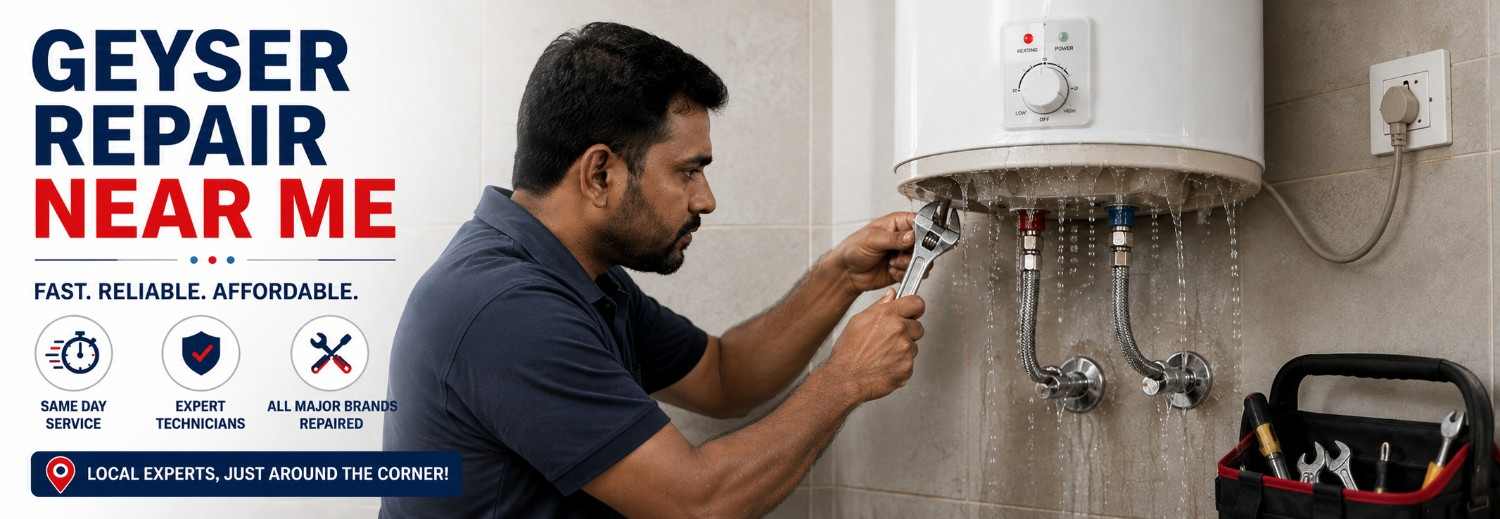
Loose or damaged inlet and outlet fittings. The simplest fix on this list. Tightening or resealing the connection points usually resolves it in under 20 minutes. If the fittings themselves are old or made from mismatched materials, it’s worth understanding the difference between CPVC and UPVC pipes before replacing them, since using the wrong type near a hot water outlet can lead to repeat leaks.
Power supply issues unrelated to the geyser. We’ve had a fair number of callouts where the actual fault was in the home’s circuit breaker, not the geyser. A quick test with a multimeter usually confirms this within minutes.
Geyser Leaking Water: What It Usually Means
Pressure relief valve failure. This is the most common leak source we encounter. The valve is designed to release water if internal pressure builds too high. Once it wears out, it can leak continuously even under normal pressure.
Tank corrosion. In geysers older than 6-7 years, especially in areas with harder water, we sometimes find pinhole rust damage in the tank itself. Once the tank corrodes, patching isn’t a lasting fix and replacement is the honest recommendation.
Loose inlet or outlet fittings. The simplest fix on this list. Tightening or resealing the connection points usually resolves it in under 20 minutes.
Thermostat-driven overheating. A stuck thermostat can overheat the water enough that it expands and forces leakage through the weakest point in the tank or valve.
A leaking geyser left unattended for even a few days can damage the surrounding wall or flooring, which is the same pattern we cover in our guide on water leak repair.
Geyser Repair Cost: Realistic Ranges
Based on the repairs we handle regularly, here’s what homeowners typically pay in Delhi NCR:
- Thermostat replacement: ₹400-800, including labor
- Heating element replacement: ₹800-1,800, depending on geyser capacity
- Pressure relief valve replacement: ₹300-600, one of the more affordable but non-negotiable fixes
- Full descaling and servicing: ₹500-1,000, recommended annually in hard water areas
- Tank replacement or new unit: ₹4,000-12,000+, depending on capacity and brand
These are general ranges, not fixed quotes. Always ask for an itemized estimate before work starts.
Electric vs Gas Geyser Repairs
Electric geysers make up the vast majority of our callouts and typically involve thermostat, element, or wiring faults. Gas geysers are less common but need extra caution, since issues can involve the gas valve, ignition, or ventilation. If you have a gas geyser, mention this when booking so the right technician is sent.
How to Choose a Reliable Geyser Repair Service Near You
- Confirm the technician has handled your specific geyser brand before
- Ask for an itemized estimate before repair begins, not just a flat number
- Ask whether the repair comes with any warranty period
- Check if same-day service is available for urgent leaks or total failures
- Look for reviews from other local customers, not just star ratings
For an urgent leak outside normal hours, our emergency plumber service can usually handle geyser issues alongside general plumbing calls.
Preventing Future Geyser Problems
The single biggest factor we see behind repeat geyser complaints is skipped maintenance. Flushing the tank every 3-4 months clears sediment before it damages the heating element. Keeping the thermostat at a moderate setting, rather than maximum heat, reduces long-term strain. An annual inspection catches early corrosion or a weakening pressure valve before it turns into a leak. The Bureau of Energy Efficiency also recommends periodic servicing to keep water heaters running safely and efficiently.
Conclusion
Most geyser problems, from a leaking valve to a unit that won’t heat at all, come down to a small number of recurring faults that a trained technician can diagnose quickly. If you’re searching for geyser repair near me, look for a service that gives honest cost estimates, has hands-on experience with your geyser type, and can respond quickly when the issue can’t wait.
FAQs
1. How much does geyser repair cost on average?
Most common repairs, like a thermostat or pressure valve replacement, cost between ₹300 and ₹1,800 including labor. Full tank replacement runs higher, typically ₹4,000 and up.
2. Why is my geyser leaking water from the bottom?
This is most often caused by a worn pressure relief valve, loose fittings, or tank corrosion in older units. It should be checked within a day or two to avoid water damage.
3. Why does my geyser trip the MCB when switched on?
This usually points to a wiring fault, damaged heating element, or short circuit. It’s an electrical issue and should be inspected before the geyser is used again.
4. How often should a geyser be serviced?
Once a year is standard, though homes in hard water areas benefit from servicing every 6-8 months to prevent sediment buildup.
5. Can a geyser be repaired, or does it need replacement?
Most faults, including thermostat and heating element issues, are repairable. Replacement is usually only necessary when the tank itself has corroded or cracked.